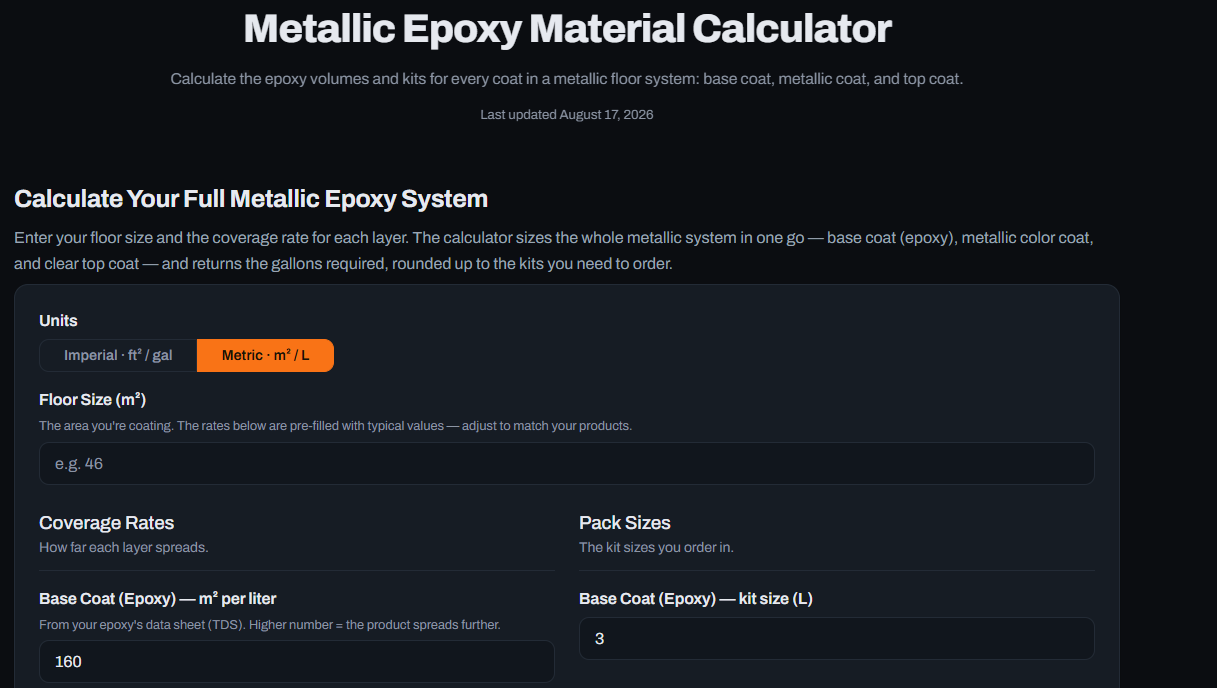
A metallic epoxy material calculator can help contractors turn a measured floor area into quantities for the base coat, metallic color coat, and clear topcoat. The estimate is only as accurate as the floor measurement, coverage rates, pack sizes, and system details entered before calculation begins.
Metallic floors need careful planning because the decorative coat often uses more resin and relies heavily on application technique. Estimating each layer separately can reduce shortages without leaving the crew with excessive unused material.
Measure the Coated Area First
Before calculating gallons or kits, determine the actual area receiving coating. L-shaped rooms, alcoves, and separate zones should be measured individually and then added together rather than estimated from the building footprint.
A square foot calculator can convert length and width into a total area for each section. The final number should exclude spaces that will not be coated and should be checked against site measurements before materials are ordered.
Use Product-Specific Coverage Rates
Coverage rates should come from the technical data sheet for the exact resin being used. The base coat, metallic layer, and clear topcoat can all spread at different rates because they are applied at different thicknesses.
Generic defaults are useful for early planning, but they should not replace manufacturer information. Surface porosity, application method, temperature, and required film build can all influence material use.
Calculate Every Layer Separately
A metallic system commonly includes a coloured base coat, the metallic epoxy layer itself, and a clear protective topcoat. Each stage should have its own coverage calculation and kit count.
Combining all resin into one average rate can hide shortages. The metallic coat may require significantly more material per square foot than the clear topcoat, so the estimate should reflect the full build.
Round Up to Real Kit Sizes
Calculators may show that a project needs 3.4 gallons of one product and 5.2 gallons of another, but contractors usually buy complete kits. Orders therefore need to be rounded to available package sizes.
This can create leftover material, but that is preferable to running short during a live application. Contractors should record the pack sizes they actually purchase so estimates reflect real ordering.
Allow for Slab Condition and Waste
Concrete does not always absorb coating evenly. Rough grinding profiles, patched areas, edges, and porous sections can increase material use compared with a smooth slab.
A sensible waste allowance should cover mixing containers, roller or squeegee loss, edges, and small application variations. The allowance should be deliberate rather than an oversized percentage added automatically.
Plan the Metallic Coat Around Technique
Metallic epoxy gets its movement and depth from how the material is manipulated while wet. Pouring patterns, squeegee movement, rollers, and the crew’s working rhythm can influence both appearance and consumption.
A sample board is useful before the full floor. It allows the crew to confirm color combinations, technique, and approximate usage without experimenting for the first time on the customer’s floor.
Check the Topcoat Quantity Carefully
The clear protective layer affects sheen, abrasion resistance, cleaning, and the final feel of the floor. Its coverage rate should be calculated independently rather than treated as whatever material remains.
If the specification calls for more than one protective coat, each layer needs its own quantity. Texture additives or a rougher underlying finish may also influence coverage.
Organize the Order Before Installation Day
Once quantities are calculated, review every product, pack size, pigment, tool, and accessory in order of use. This helps identify missing items before the floor is prepared and ready for resin.
The crew should also know which kits belong to each layer. Clear labeling can prevent the wrong product from being opened during a time-sensitive application.
Compare Estimated and Actual Usage
After the job, record how much material was purchased, opened, and actually used. This turns each completed floor into useful estimating data for future projects.
If metallic coats repeatedly use more resin than expected, or topcoat quantities regularly come in high, future assumptions can be adjusted. Real project data gradually improves calculator inputs.
Conclusion
Metallic epoxy estimating works best when floor area, product coverage, pack size, waste, and application technique are treated as separate variables. One accurate measurement can drive the system only when every layer uses the correct data.
By measuring carefully, using current technical information, rounding to real kit sizes, and reviewing actual usage after installation, contractors can create more reliable material orders. Better estimating reduces last-minute supply runs and gives the crew more freedom to focus on the decorative finish.